Story
Inside this season’s coffee harvest on Kilimanjaro
Picking has started on the southern slopes. We spent a week with the families who grow our coffee to see how the crop is coming in.
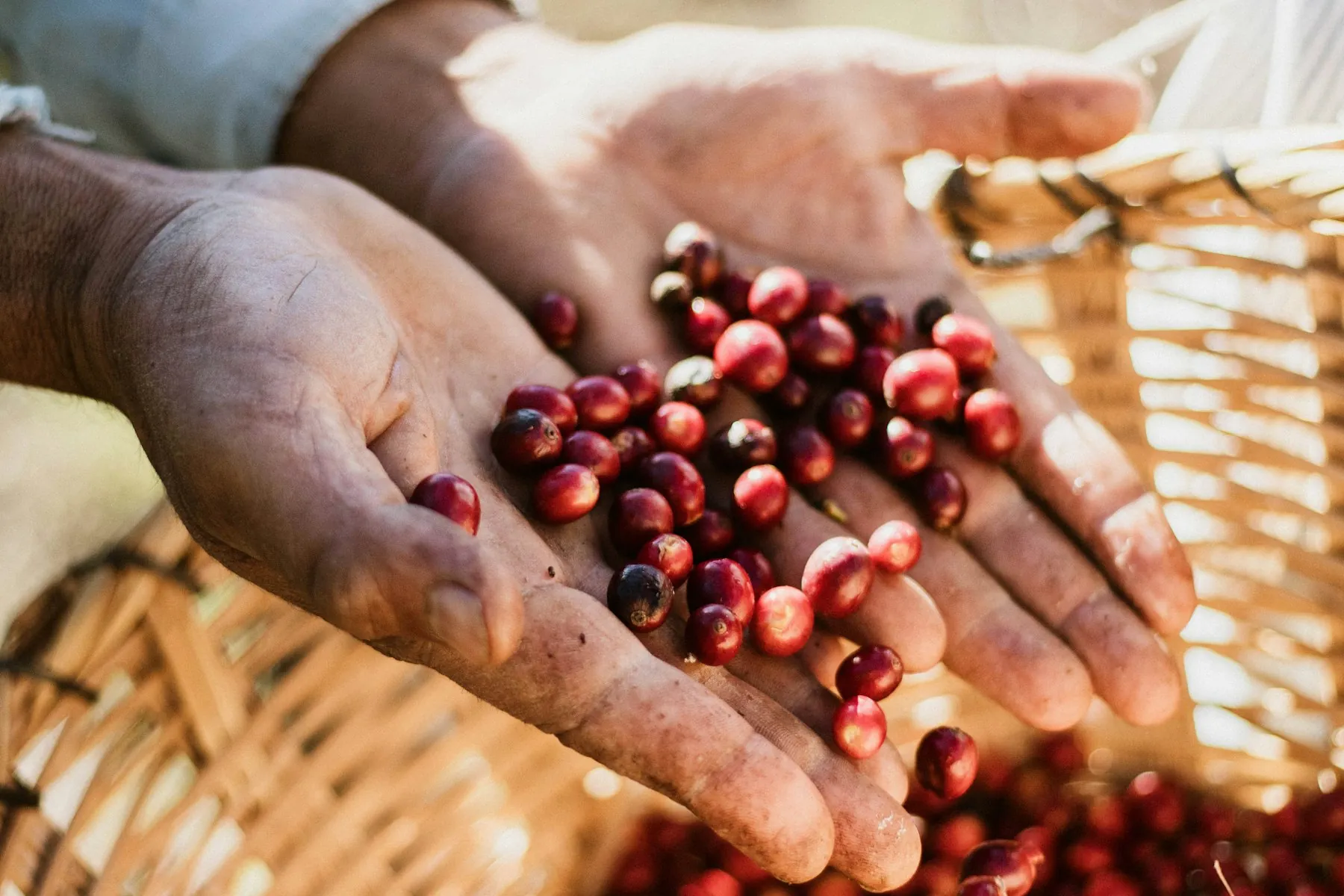
By six in the morning the paths above Kibosho are already busy. Pickers move between the rows with baskets on their hips, choosing only the cherries that have turned deep red. It is slow work, and it is the single biggest reason our coffee tastes the way it does.
The rains came on time this year, and the cherries filled out evenly. Farmers are telling us the crop is larger than last season and the fruit is healthy, with little sign of berry disease.
Ripe cherry only
Every partner farm is picked four or five times across the season. A green cherry picked too early adds sourness to the cup; an overripe one adds a fermented taste. Our field officers visit each village before picking starts to agree when the first round should begin.
“When we pick only the red ones, the price is better and the coffee is better. Our children learn this from the first day they carry a basket.” — Neema Massawe, coffee farmer, Kibosho
From the farm to the drying beds
Cherries reach our pulping station the same afternoon they are picked. They are pulped, fermented overnight and washed in spring water before going onto raised drying beds, where they are turned by hand several times a day.
- Average picking day: 60–80 kg of cherry per person
- Time on the drying beds: 14–21 days
- Target moisture before storage: 11%
The first lots will be ready for cupping next month. If you would like pre-shipment samples of this season’s AA or peaberry, let our sales team know.